






How Technology at Cape Coral Dentistry Makes a Difference
The tools a dental practice uses directly shape the accuracy of diagnosis, the comfort of treatment, and the quality of outcomes a patient can expect. At Cape Coral Dentistry, Dr. Wesley Nelson has invested in a suite of advanced dental technologies that allow the team to see more, plan better, treat more precisely, and communicate more clearly with every patient. These are not cosmetic upgrades to the practice environment; they are clinical tools that produce measurably better results. From the first X-ray at a new patient visit to the final scan confirming a restoration fits properly, technology is integrated into every stage of care at the practice. Patients who have visited other offices will notice the difference, and Dr. Nelson’s team takes time to explain what each tool does and why it matters for that specific patient’s treatment.

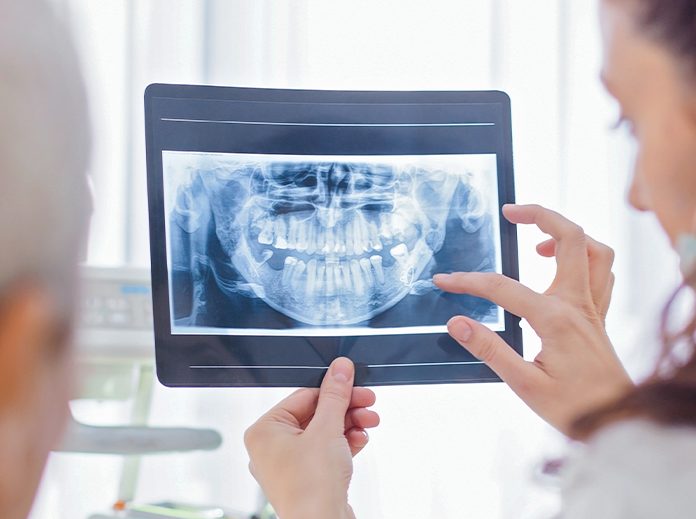
Technology at Cape Coral Dentistry Includes
Key Findings
Digital X-rays reduce patient radiation exposure by up to 90% compared to traditional film radiography while producing sharper, instantly viewable images that can be enlarged and enhanced for more accurate diagnosis
Cone beam 3D imaging captures detailed views of bone, nerves, and anatomical structures that traditional 2D X-rays cannot show, improving implant and surgical planning accuracy by up to 60%
The Cavitron ultrasonic scaler removes plaque and calculus up to 50% more effectively than manual scaling alone and is particularly beneficial for patients undergoing deep cleaning treatment for gum disease
Intraoral cameras allow patients to see exactly what Dr. Nelson sees in real time, improving understanding of recommended treatment and increasing early detection of cracks, decay, and gum changes
Digital impressions taken with the intraoral scanner eliminate the discomfort of traditional putty impressions and improve the fit accuracy of crowns, aligners, and other restorations by up to 60%
Rotary endodontic instruments reduce root canal treatment time by up to 40% and clean the canal system more consistently than traditional hand-filing techniques, improving long-term outcomes
Looking for a New Dentist in Cape Coral?
Cape Coral Dentistry offers a full range of dental services for patients of all ages, all delivered by Dr. Wesley Nelson and his knowledgeable, friendly team in a comfortable boutique office setting. As a family-owned and operated practice, the team is built around honest care, transparent pricing, and personalized treatment plans that reflect each patient’s actual needs and budget. New patients are welcome, same-day appointments are available, and affordable specials starting at $59 make it easy to get started. Whether you need a routine cleaning or a complete smile restoration, Dr. Nelson and his team are equipped to handle your care from start to finish in one convenient location.
How Technology Improves Patient Outcomes
(percentage of patients who benefit vs. outcome improvement vs. traditional methods)
How common the problem is
Technology Improves Patient Outcomes
Cavitron
Ultrasonic Cleaning
100
50
Cone Beam Imaging
3D Diagnostic Scanning
45
60
Digital X-rays
Digital Radiography
100
90
Intraoral Camera
Real-Time Tooth Imaging
80
35
Intraoral Scanner
Digital Impressions
70
60
Rotary Endodontics
Motorized Root Canal System
100
40
0%
10%
20%
30%
40%
50%
60%
70%
80%
90%
100%
0%
50%
100%
| Technology | Patients Who Benefit | Outcome Improvement vs. Traditional Methods |
|---|---|---|
| Cavitron Ultrasonic Cleaning | Benefits all patients receiving professional cleanings, including those with active gum disease | Removes plaque and calculus up to 50% more effectively than manual scaling, with greater comfort for sensitive patients |
| Cone Beam Imaging 3D Diagnostic Scanning | Critical for up to 45% of implant and surgical cases where 2D X-rays miss key anatomical details | Improves implant placement accuracy and reduces surgical complications by up to 60% |
| Digital X-rays Digital Radiography | Used for all patients requiring diagnostic imaging | Reduces radiation exposure by up to 90% compared to film X-rays while producing sharper, instantly available images |
| Intraoral Camera Real-Time Tooth Imaging | Improves diagnosis and patient understanding in up to 80% of cases | Increases early detection rates by up to 35% and improves patient understanding of recommended treatment |
| Intraoral Scanner Digital Impressions | Replaces traditional impressions for up to 70% of restorative and orthodontic cases | Improves restoration fit accuracy by up to 60% and eliminates the discomfort of traditional impression materials |
| Rotary Endodontics Motorized Root Canal System | Used in all root canal procedures | Reduces treatment time by up to 40% and improves canal cleaning consistency compared to manual hand-file techniques |
Sources: ADA | Journal of Endodontics | International Journal of Oral and Maxillofacial Implants | Journal of Dental Research | AAP | Journal of Prosthodontics | Oral Radiology
Read Our Verified 5-Star Reviews
Your Trusted Cape Coral Dentist


“Investing in the right technology is one of the most important decisions a dentist makes for their patients. Every piece of equipment we use at Cape Coral Dentistry was chosen because it makes diagnosis more accurate, treatment more comfortable, or outcomes more predictable. Our patients deserve to be treated with tools that reflect the current standard of care, and that is what we are committed to delivering.”
Dr. Wesley Nelson
Questions Cape Coral
Dental Patients Ask
What is a Cavitron and how is it different from a regular cleaning?
A Cavitron is an ultrasonic scaling device that uses high-frequency sound vibrations and a fine water mist to break apart plaque, tartar, and bacterial deposits on the teeth and below the gumline. Compared to manual scaling with hand instruments alone, ultrasonic cleaning reaches deeper into gum pockets, removes calculus more completely, and is generally more comfortable for patients with sensitivity. At Cape Coral Dentistry, the Cavitron is used as part of both routine cleanings and deep cleaning procedures for patients with active gum disease.
Why does Cape Coral Dentistry use cone beam imaging instead of standard X-rays for certain cases?
Traditional 2D X-rays provide valuable diagnostic information but show a flat representation of structures that are three-dimensional in reality. Cone beam computed tomography (CBCT) captures a full 3D image of the teeth, jawbone, nerve pathways, and sinus cavities, giving Dr. Nelson a far more detailed picture for surgical and implant planning. This level of detail helps identify bone volume, locate nerves precisely, and detect anatomical variations that would not be visible on a standard X-ray, reducing the risk of surgical complications and improving the accuracy of implant placement.
Are digital X-rays really safer than traditional film X-rays?
Yes. Digital radiography uses significantly less radiation than conventional film X-rays, with most systems reducing exposure by 70% to 90%. The sensors used in digital systems are also more sensitive, meaning a diagnostic-quality image can be captured with a shorter exposure time. Beyond the safety advantage, digital X-rays produce images immediately, without the need for chemical developing, and can be enlarged, enhanced, and shared easily. At Cape Coral Dentistry, digital X-rays are standard for all patients.
What does an intraoral camera do and will I be able to see my own teeth?
An intraoral camera is a small, pen-sized device that captures high-resolution video and still images from inside the mouth and displays them in real time on a chairside screen. Patients can see exactly what Dr. Nelson sees, including areas that would otherwise be impossible to view in a mirror, such as the backs of molars, early cracks, worn enamel, and gum recession. The intraoral camera is one of the most effective tools for helping patients understand their own oral health and make informed decisions about treatment. Many patients find that seeing a problem directly makes the need for treatment immediately clear in a way that a description alone does not.
What is an intraoral scanner and does it replace traditional impressions?
An intraoral scanner is a handheld digital device that captures thousands of images per second to build a precise 3D model of the teeth and gums without the need for traditional putty impressions. For most restorative and orthodontic applications, the digital scan replaces the impression entirely. Patients who have experienced gagging or discomfort with traditional impression trays typically find the scanner significantly more comfortable. The digital model is also more accurate than a physical impression and can be sent directly to the dental lab or used in chairside treatment planning.
What is rotary endodontics and how does it improve a root canal procedure?
Rotary endodontics refers to the use of electrically powered, nickel-titanium instruments to clean and shape the root canals during treatment, rather than relying on manual hand files alone. The rotary instruments are flexible enough to navigate the natural curves of the canal and remove infected tissue more consistently and efficiently than hand filing. This results in a faster procedure, a more thorough clean, and less fatigue in the surrounding tooth structure. For patients, rotary endodontics means a shorter appointment and a more predictable outcome. Dr. Nelson uses rotary instrumentation as the standard approach for all root canal procedures at the practice.
Does every patient need all of these technologies at every visit?
Not every technology is used at every appointment. The tools Dr. Nelson uses depend on what the patient’s visit involves. Digital X-rays are taken on a schedule appropriate to each patient’s age, risk level, and clinical history. The intraoral camera may be used at any visit where Dr. Nelson wants to document findings or show a patient something specific. The Cavitron is used during cleanings. Cone beam imaging, the intraoral scanner, and rotary endodontics are used when the specific procedure calls for them. The goal is always to use the right tool for the right situation, not to apply technology for its own sake.